Lead Magnet Funnel for Service Businesses: A Practical Plan
Build a lead magnet funnel for service businesses that attracts the right problem, captures permission, qualifies intent, and routes the next step.
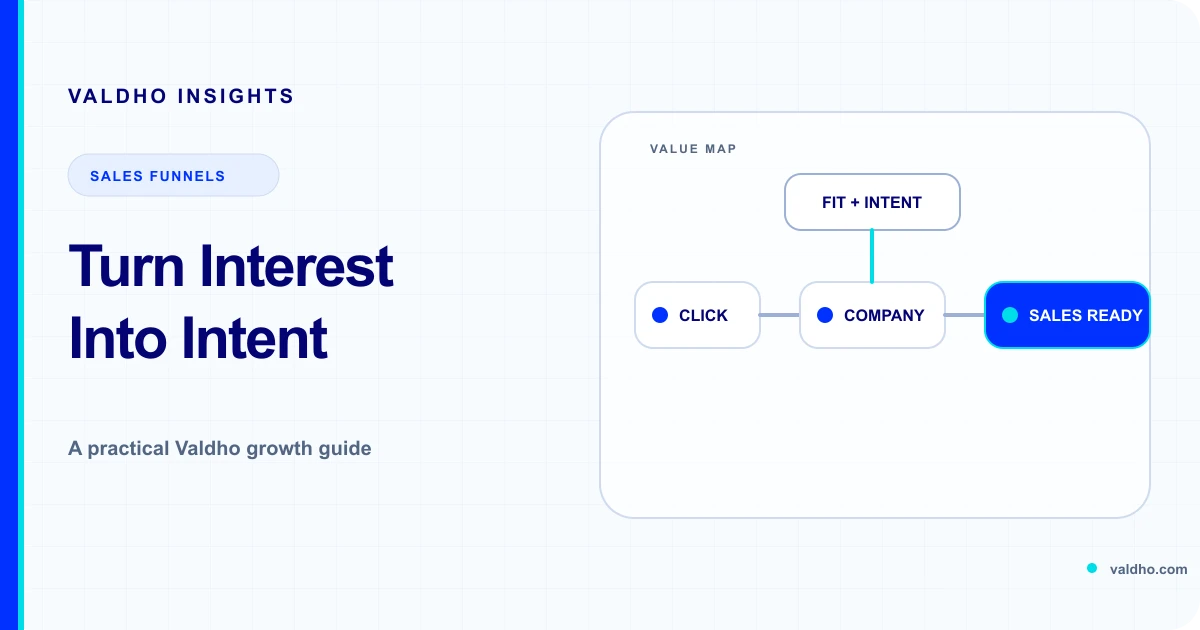
A lead magnet funnel for service businesses should help a prospect solve one early problem and help the business understand what that prospect needs next. The useful exchange is not simply a file for an email address. It is a short decision journey: make a specific promise, deliver the resource, capture permission clearly, observe relevant intent, and offer a next step that fits the evidence.
This approach works for coaches, consultants, agencies, and other service providers because expertise can be packaged into a practical diagnostic, checklist, template, calculator, or short lesson. The resource should stand on its own. The funnel then connects that first win to a sensible conversation, service, or learning path without pretending every download is sales ready.
1. Start with the paid outcome, not the free format
Write the paid outcome your service creates, the buyer who needs it, and the first problem they can recognize before they are ready to hire you. A strong lead magnet lives one decision before the paid offer. It helps the prospect diagnose, prepare, compare, or begin something that naturally reveals whether deeper help is useful.
- Outcome: what business or personal change does the paid service create?
- Audience: which role, situation, or maturity level is the service designed for?
- Early problem: what can the prospect identify before a sales conversation?
- Useful result: what can the resource help them decide or complete today?
- Natural bridge: what evidence would make a deeper next step relevant?
2. Choose a resource people can use quickly
Match the format to the job. A checklist helps someone execute a known process. A scorecard helps them assess a current state. A template reduces blank-page work. A calculator supports a bounded decision when the inputs and assumptions are clear. A short lesson explains a concept that must be understood before action.
- Consultant: a project-readiness scorecard that exposes missing decisions before kickoff.
- Coach: a weekly review worksheet that turns a broad goal into the next commitment.
- Agency: a campaign handoff checklist that identifies missing assets and approvals.
- B2B service: a process audit that maps one operational bottleneck and its owner.
- Specialist: a comparison guide that explains when each approach is and is not suitable.
Do not make the resource large merely to make it appear valuable. Define one completion event, such as producing a score, choosing a route, filling a plan, or identifying the first constraint. Make the first instruction visible, include a worked example, and state what the resource cannot decide.
3. Build the smallest complete funnel
Map the journey as one focused branch of your B2B lead generation funnel. The minimum complete path is promotion, landing page, form, confirmation, delivery, follow-up, qualification, and a routed next step. Give every stage one purpose and one owner before adding channels or extra messages.
- Promotion names the audience, problem, and resource without promising the paid outcome.
- Landing page explains what the resource contains, who it is for, and what happens after submission.
- Form requests only the information needed for delivery, permission, or an immediate route.
- Confirmation page provides the resource or states exactly how and when it will arrive.
- Follow-up helps the prospect use the resource before asking for a larger commitment.
- Qualification uses relevant answers and behavior to select the next useful action.
- Routing sends the lead to self-service, nurture, a meeting, or a human review.
4. Make the form clear and proportionate
Every field creates work for the prospect and a data-handling obligation for the business. Separate what is required to deliver the resource from what would merely be interesting to know. Ask a qualifying question only when its answer changes the route, message, owner, or offer.
The W3C Web Accessibility Initiative's current guidance says form controls should have labels that describe their purpose and should be associated with the corresponding controls. Review the exact W3C form-label guidance, then test the form with a keyboard, at mobile width, with validation errors, and after a slow or repeated submission.
- Use visible, descriptive labels instead of relying on placeholder text.
- Explain why a non-obvious field is requested and how it affects the next step.
- Keep delivery permission separate from optional marketing choices when your rules require that distinction.
- Show clear success, error, and already-submitted states.
- Preserve source and resource identifiers without placing personal data in public URLs.
5. Define permission and delivery before follow-up
State what the person will receive immediately and what other messages may follow. Store the wording, source, timestamp, and applicable preference so the team can explain why a message was sent. If the person asks to stop marketing messages, the stop state should be visible to every relevant sender and automation.
For businesses sending commercial email in the United States, the FTC's current CAN-SPAM compliance guide explains that the law covers commercial messages, including business-to-business email, and lists requirements for truthful headers and subject lines, identification, postal address, opt-out instructions, prompt handling of opt-outs, and oversight of vendors. Treat this as United States guidance and confirm the rules that apply to your audience, channels, and location.
6. Design follow-up around resource use
The first message should deliver the promised resource and point to the first action. Later messages should solve a nearby problem, show an example, or help interpret the result. An invitation to a call or paid offer should explain who it is for, what decision the conversation supports, and what someone should do if they are not ready.
- Delivery: provide the resource, first instruction, support route, and preference link.
- Application: show how to complete one section or avoid one common misuse.
- Interpretation: explain what different answers or scores suggest as a next action.
- Decision: offer the suitable service, meeting, template, or self-service route.
- Stop: suppress the sequence after an opt-out, invalid address, sales handoff, or other documented exit state.
7. Route by evidence, not by one score
Create a small decision table that combines declared context with observed actions. A clear project need and a direct request can justify a human-owned route. A resource request with no further signal may remain in a useful nurture path. An existing customer, vendor, student, or job applicant should move to the route designed for that relationship rather than entering a generic sales sequence.
Align the handoff with the way your team actually delivers work across the service-provider journey. For each route, name the owner, response expectation, visible context, next action, and stop rule. Automation should prepare the handoff, not disguise the absence of an owner.
- High-fit, explicit request: assign a person and preserve the resource, answers, and source context.
- High-fit, early research: continue education and offer a clear way to request help.
- Low-fit or out-of-scope: provide a useful alternative without forcing a sales call.
- Existing relationship: route to the correct support, account, or learning process.
- Unknown or conflicting data: hold for review instead of guessing.
8. Measure the decisions the funnel should improve
Start with an event and ownership map rather than a dashboard. Record eligible landing-page visits, valid submissions, successful deliveries, meaningful resource actions when they are observable, qualified next steps, booked meetings, attended meetings, accepted opportunities, and verified sales. Define duplicates, tests, spam, cancellations, and unknown sources before calculating rates.
Google Analytics currently lets a team mark important events as key events and use funnel explorations to define direct or indirect steps, time constraints, breakdowns, and filters. Read Google's guidance for marking key events and building funnel explorations. Configure those reports around your definitions, then reconcile them with the CRM, calendar, and sales records that prove downstream outcomes.
- Promise quality: which promotion and landing-page message attracts the intended problem?
- Form quality: which fields cause confusion, errors, or abandonment?
- Delivery quality: which valid submissions fail to receive or open the resource?
- Use quality: which leads complete the resource's meaningful action when it can be measured responsibly?
- Route quality: which leads receive the correct owner and next step?
- Business quality: which cohorts produce accepted meetings, opportunities, and verified sales?
Test the complete journey before promotion
- The promise, audience, resource, and paid outcome describe the same problem.
- Every form control has a useful label, clear error state, and keyboard path.
- A valid submission creates one lead and one delivery, even when retried.
- The confirmation page and delivery message point to the first useful action.
- Marketing permission, preference, and stop states behave as documented.
- Qualification changes a real route rather than only adding a decorative score.
- Human owners receive enough context to continue the conversation.
- Test, duplicate, invalid, existing-customer, and out-of-scope records follow safe paths.
- Analytics, CRM, meeting, and sales records can be reconciled without inventing missing links.
When your promise, resource, permission language, routing table, and test cases are ready, compare Valdho plans against the landing pages, forms, follow-up, CRM, meeting, and delivery workflow you intend to build. Confirm the exact supported setup before launch, and keep the first version focused on one audience, one resource, and one measurable next step.
Put the playbook into practice
Build the journey and automate the next step with Valdho
Create pages, capture and qualify leads, automate follow-up, and measure conversion from one connected workspace.
Start 14-day trial